Corona Insights has worked with hundreds of clients since 1999, from big government agencies to small nonprofits – from our neighbors in Denver to clients throughout the United States. Below are a few examples of how our market research, evaluation and learning, and strategy and facilitation services have guided organizations forward.
Association for Computing Machinery (ACM)
Our Work:
Member and prospective member research, international research, online surveys, in-depth interviews, focus groups

The Association for Computing Machinery (ACM) retained Corona to provide insights into select markets essential for their continued growth. Over the course of two engagements with ACM, we conducted an online survey of members and non-members around the world and later conducted focus groups and interviews to follow up on the survey. This research was conducted across the United States and in three foreign markets. The survey helped ACM set their priorities while the focus groups and interviews provided context and a deeper understanding of specific ways ACM could help meet members’ needs. Results helped ACM executives better inform their products and services. More broadly, we were able to package the overall results into a cohesive message and call to action for the organization.
Big Idea Project
Our Work:
Program evaluation; evaluation plans; logic models; surveys of students, teachers, business mentors, and program staff; analysis of program implementation data; statistical analysis of outcomes

Big Idea Project has retained Corona Insights for external evaluation since 2014. Our work began with developing an evaluation plan and a logic model for the program. Over the years we have iteratively designed and refined survey instruments to measure program outcomes for students, teachers, mentors, and program staff. The Big Idea Project uses these evaluation findings to make the case for the program to new schools and funders, as well as to provide direction for continuous improvement efforts within their organization.
Deep evaluation of our programs and impact was extremely important to me as an early entrepreneur, so much so that I hired Corona Insights in the first few months. Corona Insights has played a pivotal role in helping Big Idea Project grow over the years as an organization and a forerunner in the education innovation space, by helping us to provide evidence-based solutions that schools and administrators trust. The expertise of the Corona Insights team has been invaluable, and I regard them as one of our most strategic and beloved partners in our mission to shift education to unleash students as learners and leaders.
Tricia Halsey
Co-Founder and Executive Director
Big Idea Project
Camp Bow Wow
Our Work:
Focus groups, nationwide survey, customer profiles

Camp Bow Wow has worked with Corona Insights on several occasions. Our work together started when Camp Bow Wow retained us to conduct a series of focus groups to develop pricing models for various offerings and customer profiles of dog owners across the country. Next, we conducted an online national survey to better understand customer characteristics and inform advertising and sponsorship opportunities. Most recently, we conducted an additional survey to evaluate messaging and find out what services dog owners desire across the country. Our work allowed Camp Bow Wow to better understand the needs of their customers and provide services that make tails wag from coast to coast.
Children’s Museum of Denver at Marsico Campus
Our Work:
Master plan, board facilitation, strategic planning, focus groups, member survey, demographic analysis, in-depth interviews, ethnographic observation
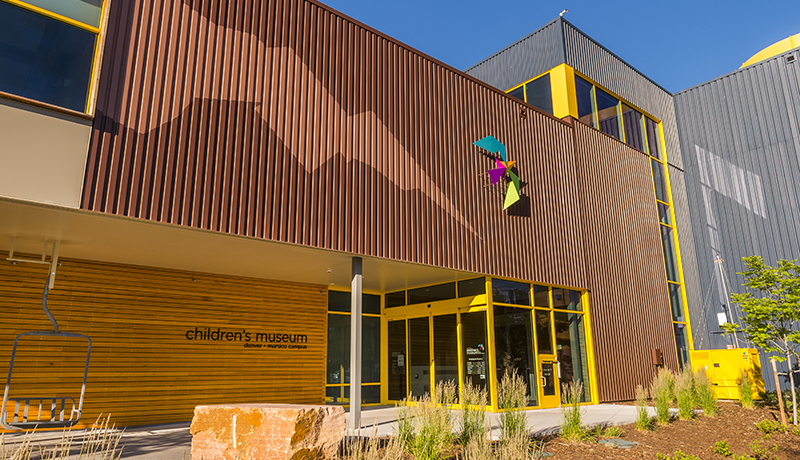
The Children’s Museum of Denver at Marsico Campus engaged Corona Insights in a four-phase, 18-month planning and visioning process to understand the current and future environment relevant to the Museum over the next 10-20 years. Over the course of this process, we conducted research including in-depth demographic analyses, future forecasts of the Denver metro area population and projected member base through 2040, ethnographic observation visits conducted at the Museum and other local cultural organizations, an email survey in which over 1,750 Museum members participated, interviews of 70 community stakeholders, and three targeted focus groups with under-represented segments of the community (also known as voice-of-the-customer research).This collaborative process culminated in the Museum’s 2030 Master Plan.
Prior to our expansion, Corona helped us recognize that we had work to do to be more inclusive and welcoming, and to think entrepreneurially. We needed to be bold, to step up as a community leader and advocate for early childhood concerns, and to look for opportunities to invest in ourselves instead of looking to others to invest in us. So many of those fundamentals we didn’t have in place yet. The research told us things that were difficult to hear and informed the introspection that we needed.
Mike Yankovich
President and CEO
Children’s Museum of Denver at Marsico Campus
College of Arts, Humanities and Social Sciences – University of Denver
Our Work:
Strategic planning, dynamic facilitation, stakeholder interviews

DU’s College of Arts, Humanities and Social Sciences reached out to Corona for guidance in developing a strategic plan in alignment with the broader institution’s IMPACT 2025 plan. Over the course of 3 months, we worked with the dean as well as the college’s faculty and staff through a series of facilitated discussions and meetings to help articulate their Keystone Strategic Plan, an ambitious and bold plan guided by two transformational priorities that inspired the college to broaden the scope of their impact.
CollegeInvest
Our Work:
Current and prospective customer research, B2B research, tracking studies, surveys, focus groups, website usability

CollegeInvest long partnered with Corona Insights to conduct research with various customer groups, both business to consumer (B2C) and business to business (B2B). Parents and grandparents (of both current and prospective students) have been extensively researched by Corona to understand awareness and perceptions of CollegeInvest, importance of college and savings, and barriers to opening a 529 savings plan account. We conducted this research, including surveys and focus groups, over time to track how the market for college savings was changing. Additionally, we have conducted segmentation analyses to help CollegeInvest further explore key markets and relevant messaging, and we have conducted usability testing on their website. Beyond individuals saving for college, we have also conducted research with HR managers, financial advisors, and CPAs to understand their perceptions and recommendations for savings products to clients.
At CollegeInvest, audience research plays a major role in developing our strategic marketing strategies, product development, and creating new services. In fact, all of our major decisions here are data-driven and Corona Insights has been an integral part of that process. For over 6 years, we’ve worked closely with them on multiple research projects to understand what both our account owners and new prospects are thinking. They listen well; they take an independent interest into our business; they offer suggestions and solutions, including business solutions; and, they respectfully challenge us and defend their positions and insights. We’re a very good team, and they are integral to our decision-making. I would recommend them in a heartbeat.
Angela Baier
CEO
CollegeInvest
Colorado Municipal league
Our Work:
Member survey, benchmark and tracking research, surveys

The Colorado Municipal League (CML) has retained Corona Insights yearly for over a decade to conduct the “State of Our Cities and Towns” research. We have been the research partner of CML on this annual project since the project’s inception. The initial study focused on creating financial benchmarks, especially critical at the time because the financial crisis had just begun. In each subsequent year, we have collected data to measure change in these metrics and tell the story of how Colorado’s towns have rebounded since the recession. Additionally, each year we collected additional information on a new topic for that year, from public safety, to parks and recreation, to transportation and more. This provided fresh insight and content for the annual report in addition to the financial monitoring. CML uses this information annually to both broadly report on the state of Colorado’s cities and towns and to inform leaders and policy around the state.
Colorado Nonprofit Association
Our Work:
Statewide survey, donor survey, economic impact analysis, facilitation, board retreats, focus groups

The Colorado Nonprofit Association and Corona Insights have worked together on both research and strategy projects for over a decade. We have executed a charitable giving study on multiple occasions to provide CNA with a demographic and behavioral profile of the state’s donors. Our work has provided CNA with a better understanding of how to serve its members and has helped shape the organization’s strategic direction. Most recently, we conducted focus groups and a statewide survey to test and develop messaging themes for the Association’s ReFUND CO campaign.
Expert, Supportive, and Collaborative. Corona has a lot of expertise and knowledge that is brought to bear on a subject matter to support the client.
Renny Fagan
President and CEO
Colorado Nonprofit Association
Colorado Secure Savings Plan Board
Our Work:
Statewide survey, focus groups, secondary-data analysis, in-depth interviews, online bulletin boards, literature review

The Colorado Secure Savings Plan Board retained Corona to study approaches to increase retirement savings in the State and to inform future policy. We worked closely with the Board, a body headed by the State Treasurer and comprised of members appointed by Governor Polis, to assess Colorado residents’ financial attitudes and behaviors related to retirement. Our role was to explain variation in savings behavior and to identify interventions that could increase individual retirement savings. Our mixed-methods research culminated in a report submitted to the Governor and General Assembly recommending that Colorado adopt a state-facilitated auto-IRA program. This report then informed proposed legislation.
Colorado Youth Corps Association
Our Work:
Strategic planning, in-person interviews, member profiles, fiscal analysis, retreat facilitation, goal prioritization
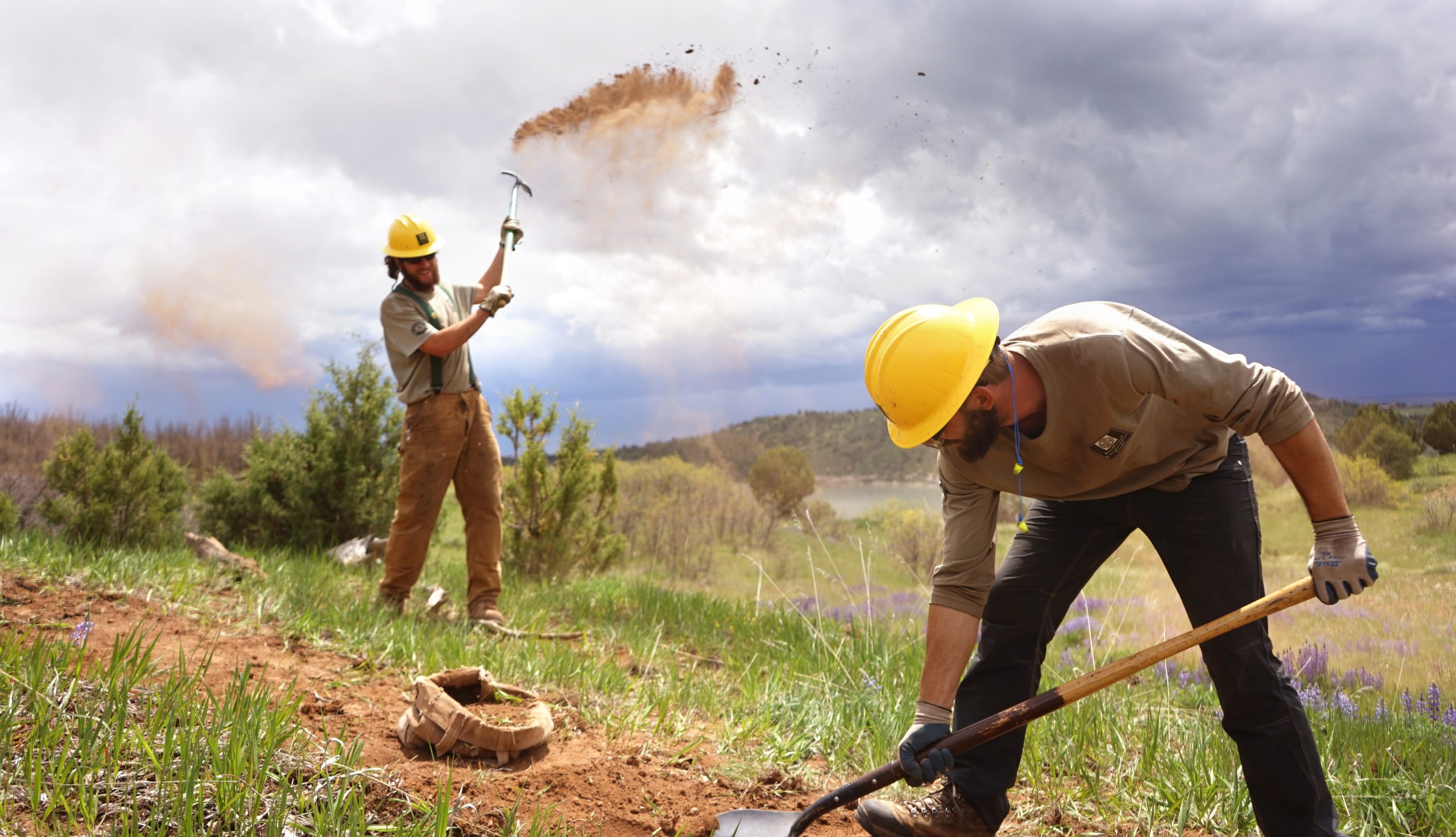
The Colorado Youth Corps Association (CYCA) hired Corona Insights to help develop a 5-year strategic plan. To ensure the plan met pressing yet diverse needs, we sought input from CYCA member corps and stakeholders through conference calls, in-person interviews, online feedback, in addition to conducting analysis of financial data. We condensed this information into an insightful summary report and a corps-driven list of strategic options. We then facilitated a Board of Directors retreat to help guide prioritization and selection of final strategic goals and desired outcomes, which we then formed into a strategic plan. The CYCA Board adopted the plan and has been making important headway on their short- and long-term goals of service optimization, fiscal resilience, equity, security, and storytelling.
Our 5-year strategic plan has gained tremendous momentum within the first six-months of implementation. Prior to working with Corona, we’d operated a significant time without a strategic plan – and that led to many disparate efforts on our part. Thanks to our member-driven and board-engaged process we now have a dynamic map to guide us forward. We know where the guardrails exist and what the goals are. As we implement the strategic plan in partnership with our member corps we have a tool to celebrate successes, achieve initial wins, and prepare for the big lifts ahead of us. This has been an overwhelmingly positive period for us. We are grateful to Corona Insights for their ability to facilitate a collaborative process that engaged us every step of the way.
Scott Segerstrom
Executive Director
Colorado Youth Corps Association
Denver Arts and Venues
Our Work:
Focus groups, nationwide survey, customer profile

The City of Denver retained Corona Insights to help in creating a cultural plan to guide the growth of Denver’s cultural infrastructure for the coming years. The 15-month, large-scale cultural planning process effort involved a wide range of research and strategy tasks. We conducted a situation analysis to understand the state of arts and culture in Denver and collected public input through in-depth interviews and an online survey. Next, we oversaw and guided design and drafts of the City’s Cultural Plan (IMAGINE 2020) while synthesizing insights from our research with facilitated conversations and in-depth interviews, including those with the City Council and Mayor’s Office. Since its creation, IMAGINE 2020 has been used as the guiding document for Denver Arts & Venues. Additionally, we have been re-fielding the public survey to determine what changes have occurred in the five years since the plan’s creation.
I certainly thought of [Corona as a] co-creator and partner as top of the list. You are creative thinkers and problem solvers. And smart. I think you guys are unique in your approaches and you are intellectually curious. Plus there is the cross-disciplinary thinking that you bring to problems.
Ginger White-Brunetti
Executive Director
Denver Arts & Venues
Denver Indian Health and Family Services
Our Work:
Needs assessment, program evaluation, evaluation plans, logic models, surveys, in-depth interviews, database development, site visits, analysis of program implementation data

Denver Indian Health and Family Services (DIHFS) has partnered with Corona Insights for research and evaluation since 2012. For example, we conducted a comprehensive community health needs assessment together for metro Denver’s American Indian/Alaska Native (AI/AN) community, which resulted in identifying priority needs and health care system recommendations. Other projects have included evaluating a program to reduce health disparities in chronic diseases, evaluating a program to help get kids and families enrolled in health insurance coverage, evaluating a program to increase access to behavioral health care, and evaluating a program to apply quality improvement processes throughout the clinic.
Donor Alliance
Our Work:
Statewide survey, benchmark and tracking research, public opinion research

Donor Alliance has long partnered with Corona Insights to provide research and evaluation regarding organ and tissue donation perceptions and personal registration as a donor. Earlier studies we have conducted established benchmarks such as public sentiment toward donation as well as barriers and myths surrounding donation. More recently, we have conducted follow-up studies with the goal of tracking these key metrics. The results of these surveys provided a useful snapshot of how the public’s awareness, opinions, and actions have changed over the years, and have informed the continual evolution of Donor Alliance’s communication strategy.
The City of Fort Collins
Our Work:
Community surveys, policy evaluation, market trend analysis, stakeholder interviews, demographic analysis

The City of Fort Collins originally hired Corona to estimate the long-term effects of enforcing a proposed ordinance to limit rental units to three unrelated occupants. Once this ordinance took effect, the City retained our services two additional times to conduct community surveys and rental market analyses to estimate the broader impact of the new law on neighborhood quality and affordability. Evidence from our work encouraged the City to maintain the status quo of enforcement and to pursue a new agenda of expanding housing supply to combat rising rental prices.
Hiring Corona was key to producing a trusted and neutral 3rd party source of facts.
Ginny Sawyer
Policy Manager
City of Fort Collins
FRIENDS FIRST
Our Work:
Program evaluation, evaluation plans, theories of change, logic models, evaluative surveys, focus groups, cognitive testing of research instruments, in-depth interviews, statistical analysis of outcomes

FRIENDS FIRST has worked with Corona Insights for external evaluation since 2013. We have helped them map out their theories of change and develop outcome measures that best capture the protective factors that their programs strive to achieve. Our evaluation work enables them to learn from their program efforts and be able to apply those lessons to strengthen their programs and processes.
Corona Insights was introduced to us last year. After struggling for year with evaluation and customer service they have been like a breath of fresh air. Not only are they well educated and experts in the essential areas of evaluation, they make themselves available to us as if they worked here at FRIENDS FIRST. Their work is timely, professional and highly intellectual yet presented in laymen terms so that not only my staff but stakeholders can understand, relate to and utilize the data. I also appreciate the personal interest they have taken in getting to know all facets of our organization. Thank you Corona Insights. I am looking forward to a very long business relationship.
Elycia R. Cook
Executive Director
FRIENDS FIRST
Logan School for Creative Learning
Our Work:
Strategic analysis, in-depth interviews, ethnographic observation, board facilitation, community input facilitation, focus groups, perceptions survey, brand attribute development

The Logan School for Creative Learning worked with Corona Insights to conduct a research-driven process aimed at articulating the Logan School’s core ethos and related brand attributes. With this project, we saw an opportunity to ensure our client launched a new branding effort on a clear, shared understanding of who they are and what makes them unique. Over the course of the 3-month process, we utilized insights and lessons learned from focus groups, in-depth interviews, an online survey, analyses of 14 competitors, and facilitated sessions with board, staff, and parents to collaboratively develop a core ethos statement that feels distinctly Logan.
Corona did a phenomenal job of knowing themselves and what their north star is—this helped us structure the process and set boundaries. The clarity of process Corona provided allowed us to achieve the clarity of message we desired.
Markus Hunt
Head of School
Logan School for Creative Learning
Minnesota Office of Traffic Safety
Our Work:
Community surveys

The Minnesota Office of Traffic Safety has worked with Corona Insights nearly every year since 2003 to conduct a telephone survey of Minnesota drivers regarding high-risk driving behaviors (e.g., drinking and driving, non-use of seatbelts, speeding, and texting while driving). This study aims to quantify the prevalence of these behaviors as well as measure awareness and perceptions of a variety of campaigns conducted by the state that aim to reduce these behaviors. In addition to understanding these behaviors and perceptions overall, the study examines and identifies demographic segments that are particularly likely to exhibit unsafe driving behaviors. The information gained through this study has allowed the Office of Traffic Safety to adjust their campaign messaging and media choices in order to maximize the impact of their campaigns, particularly with regard to the segments of the population most likely to exhibit these behaviors.
Metropolitan State University of Denver
Our Work:
Secondary data analysis, key person interviews, nationwide survey, competitive analysis
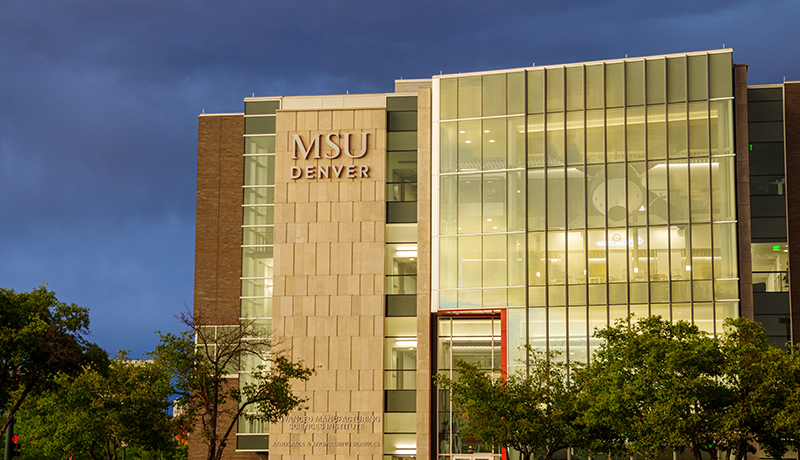
Metropolitan State University of Denver hired Corona to assess the enrollment potential of a niche degree program that had few direct peers nationwide. We started by examining the size of comparable programs elsewhere in the country to determine what success meant in terms of enrollment numbers. We then interviewed current students, faculty and staff, and professionals working in the field to understand how students discovered the program and what particular value the degree added in the eyes of professionals. Next, we conducted a nationwide panel of prospective students to understand their perceptions of the field and the degree. Finally, we conducted a competitive distinction analysis to identify particular attributes that the program might emphasize, and developed market potential estimates using multiple techniques. The result was a set of recommendations for creating marketing themes and setting a reasonable goal for enrollment over time.
The Town of Morrison, Colorado
Our Work:
Community survey, business survey

The Town of Morrison, Colorado retained Corona Insights to collect feedback from Town residents and businesses to inform future planning. The survey itself, which had different versions tailored to residents and businesses, was designed to collect feedback on overall satisfaction, quality of life, future direction, and Town communications. The survey was administered via mail with online and paper options, including several reminders. Nearly 50%of residents responded. Our analysis helped isolate the most important factors for the Town to focus on going forward and what areas the Town should focus on for improvements. The Town’s Board has used the information to inform future planning and development in town.
Summit County
Our Work:
Community surveys, needs assessment, segmentation analysis, demographic analysis

Summit County Public Health has worked with Corona Insights for nearly 15 years on projects ranging from measuring opinions about alcohol and substance abuse, to health needs assessments, to targeted studies aimed at understanding how to better reach underserved populations in the community. Most recently, we conducted research to help the County create a public health campaign aimed at enlisting adults to help prevent youth access to marijuana. To ensure voices across the community were included in our analysis, we took additional steps in data collection to sample parents, Spanish speakers, college students, and other demographics key to the County’s campaign and public health goals.
[Corona] helped us to understand statistics, how to interpret what it means, and how to word questions in order to get the information we were looking for.
Robin Albert
Youth and Family Manager
Summit County